Jibo Radio Visualizer
A human factors case study in ambient interaction design
This concept explored how a social robot could create a richer, emotionally responsive music-listening experience through adaptive visualization, low-friction interaction patterns, and multimodal feedback. Rather than functioning as a traditional media player, the goal was to make music feel alive within Jibo’s personality and physical presence.
Context
The project was created as an enhancement to Jibo’s existing Radio skill after foundational behaviors for sound, voice interaction, movement, and light-ring feedback had already been established. The opportunity was to evolve the experience from a functional music interface into an ambient, emotionally expressive system that reacted dynamically to audio content and metadata.
The visualization system leveraged:
Real-time amplitude detection
Song duration metadata
Album artwork analysis
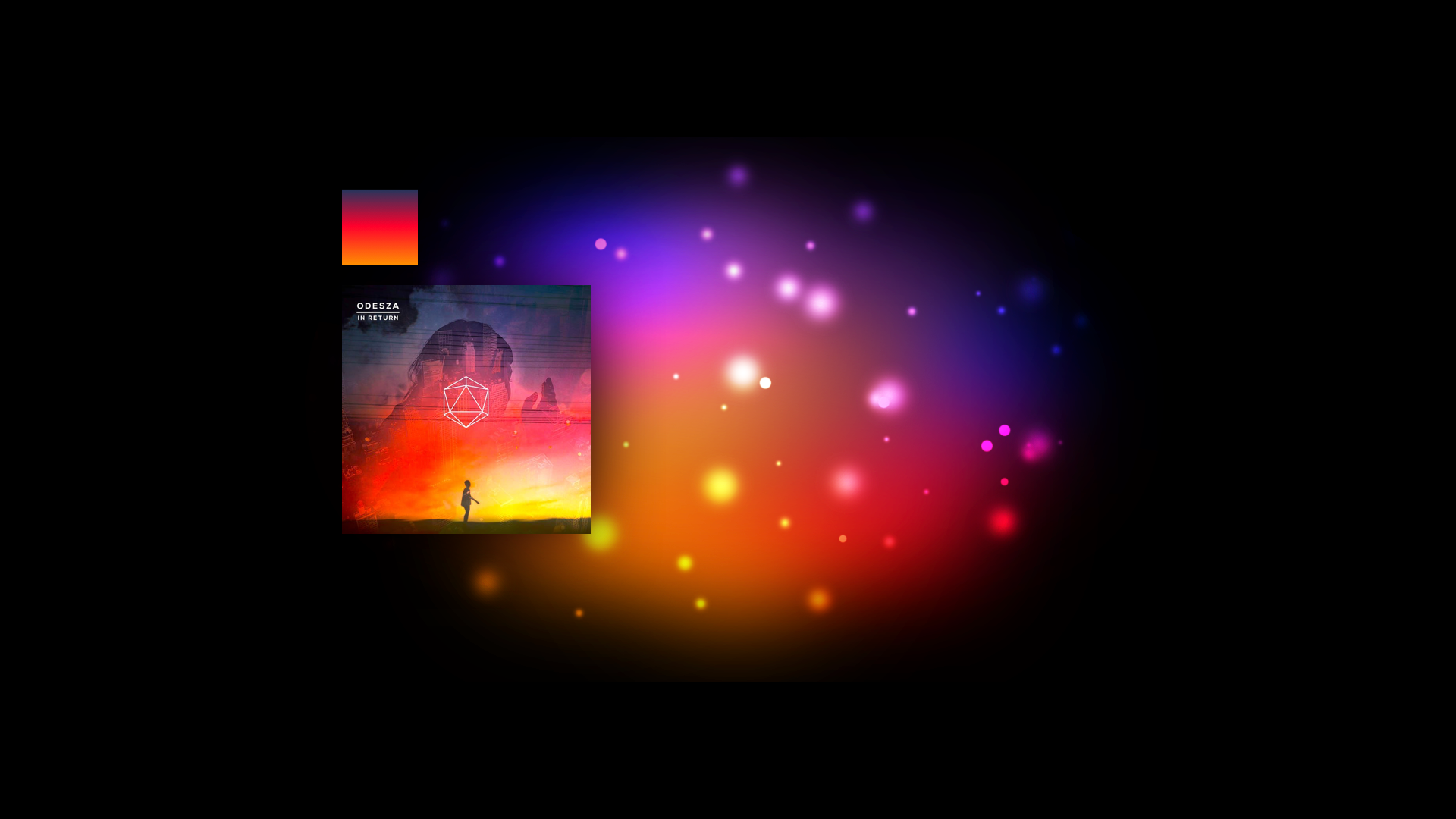
Dominant color extraction from album art
These inputs drove generative visuals that adapted continuously to the music being played.
Operator goals
Although consumer-facing, the interaction challenges mirrored many human factors principles seen in complex interface systems:
Maintain awareness of currently playing media
Reduce the need for direct touchscreen interaction
Preserve emotional engagement during passive listening
Provide lightweight controls without overwhelming the user
Reinforce Jibo’s perceived personality and responsiveness
The system was intentionally designed for “glanceability,” enabling users to understand playback state and mood without requiring focused attention.
Cognitive constraints
Music listening is typically a secondary activity occurring alongside cooking, working, socializing, or relaxing. The interface therefore had to operate under low-attention conditions.
Key cognitive considerations included:
Minimizing visual clutter during passive listening
Avoiding persistent control overlays
Using motion and color instead of dense information displays
Creating recognizable visual patterns users could subconsciously associate with playback behavior
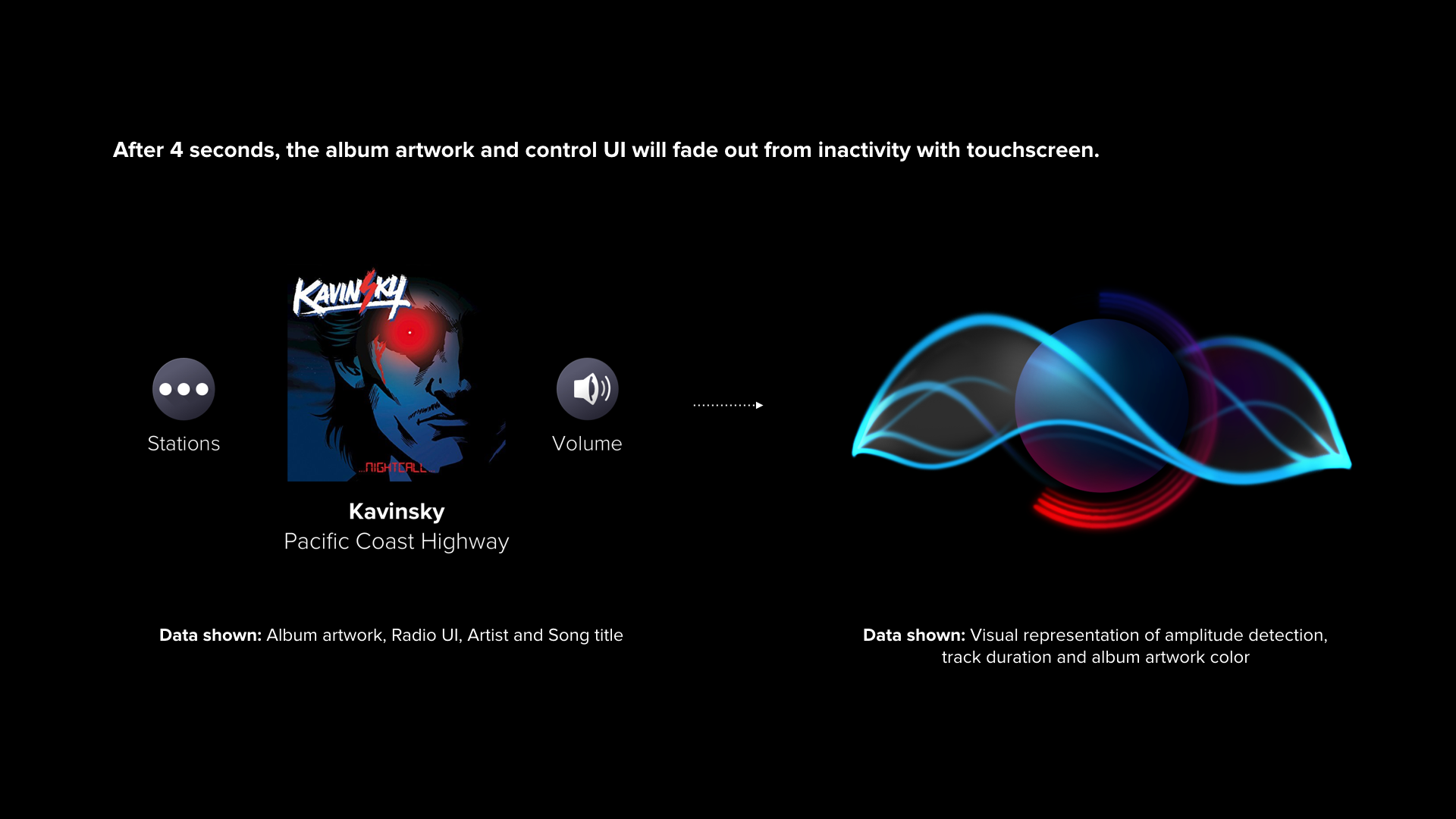
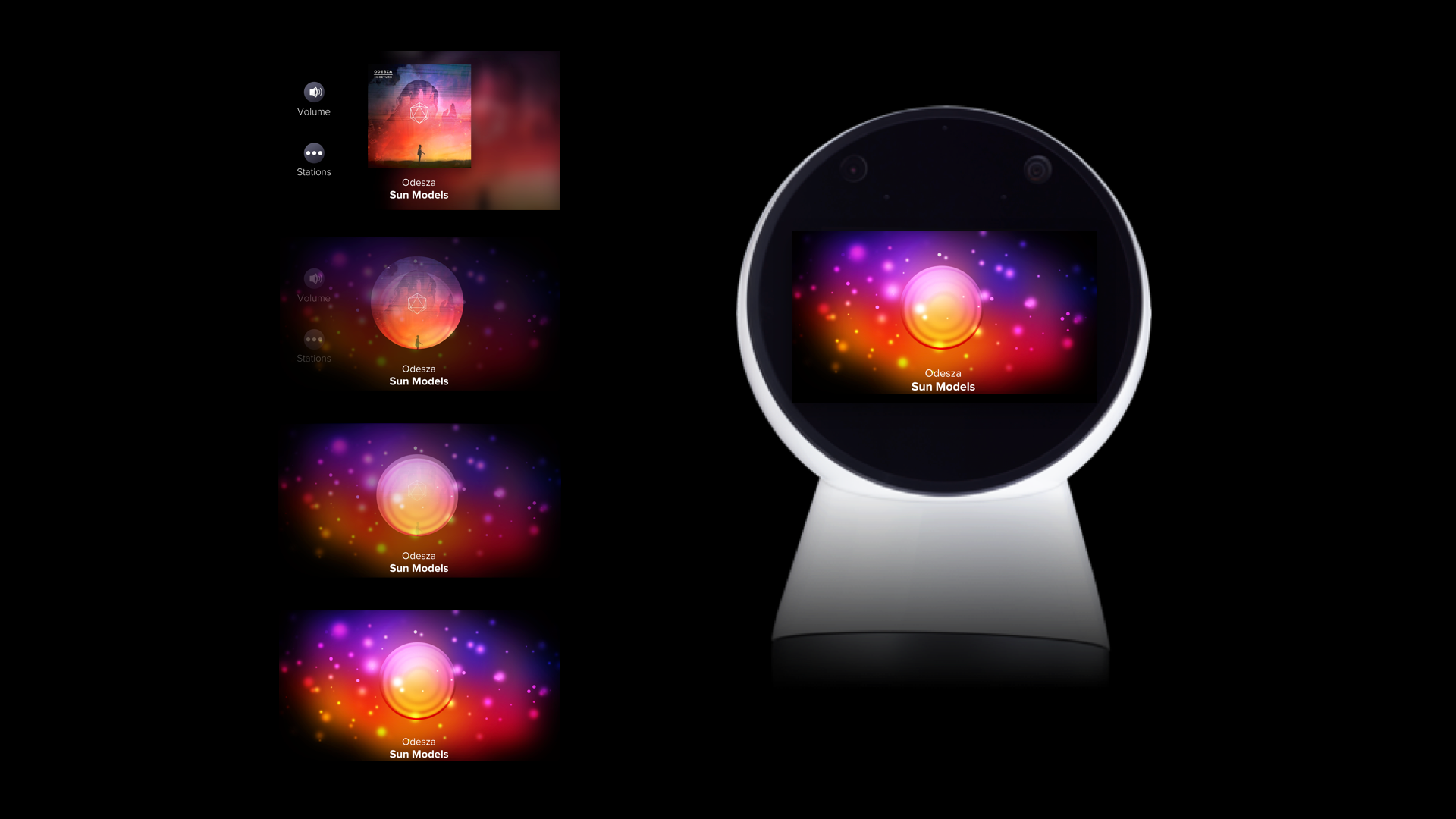
The interface automatically faded album artwork and controls after several seconds of inactivity, transitioning into a simplified ambient visualization mode.
Environmental conditions
The system was designed for home environments with varying lighting conditions and viewing distances.
Human factors considerations included:
High contrast visuals for dim environments
Large, readable visual forms visible at a distance
Strong silhouette-based motion rather than text-heavy interfaces
Reduced reliance on precision touch interaction
The dark background and luminous color system allowed the visualization to remain legible without overpowering the surrounding environment.
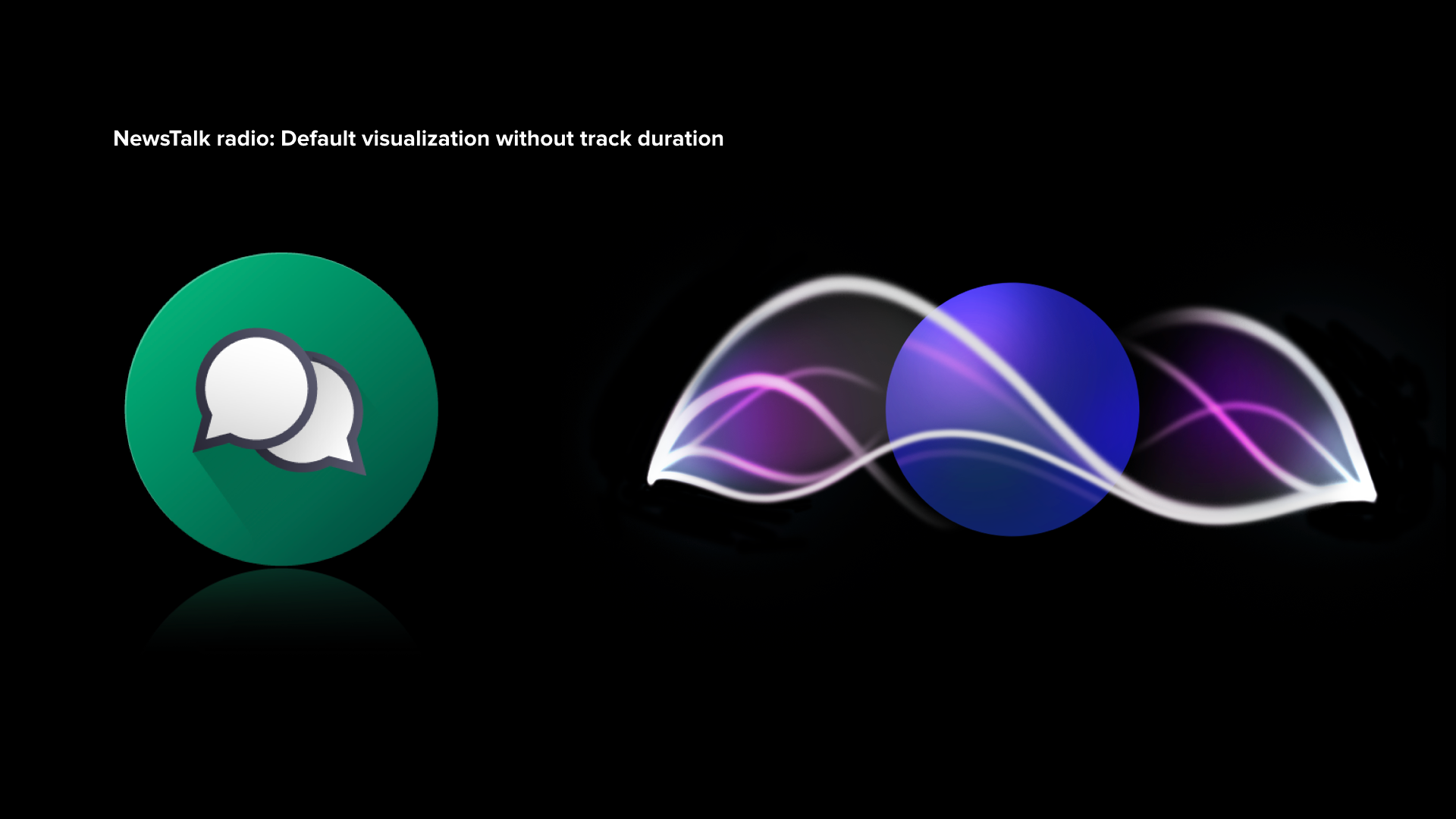
Part 1 — Structured energy
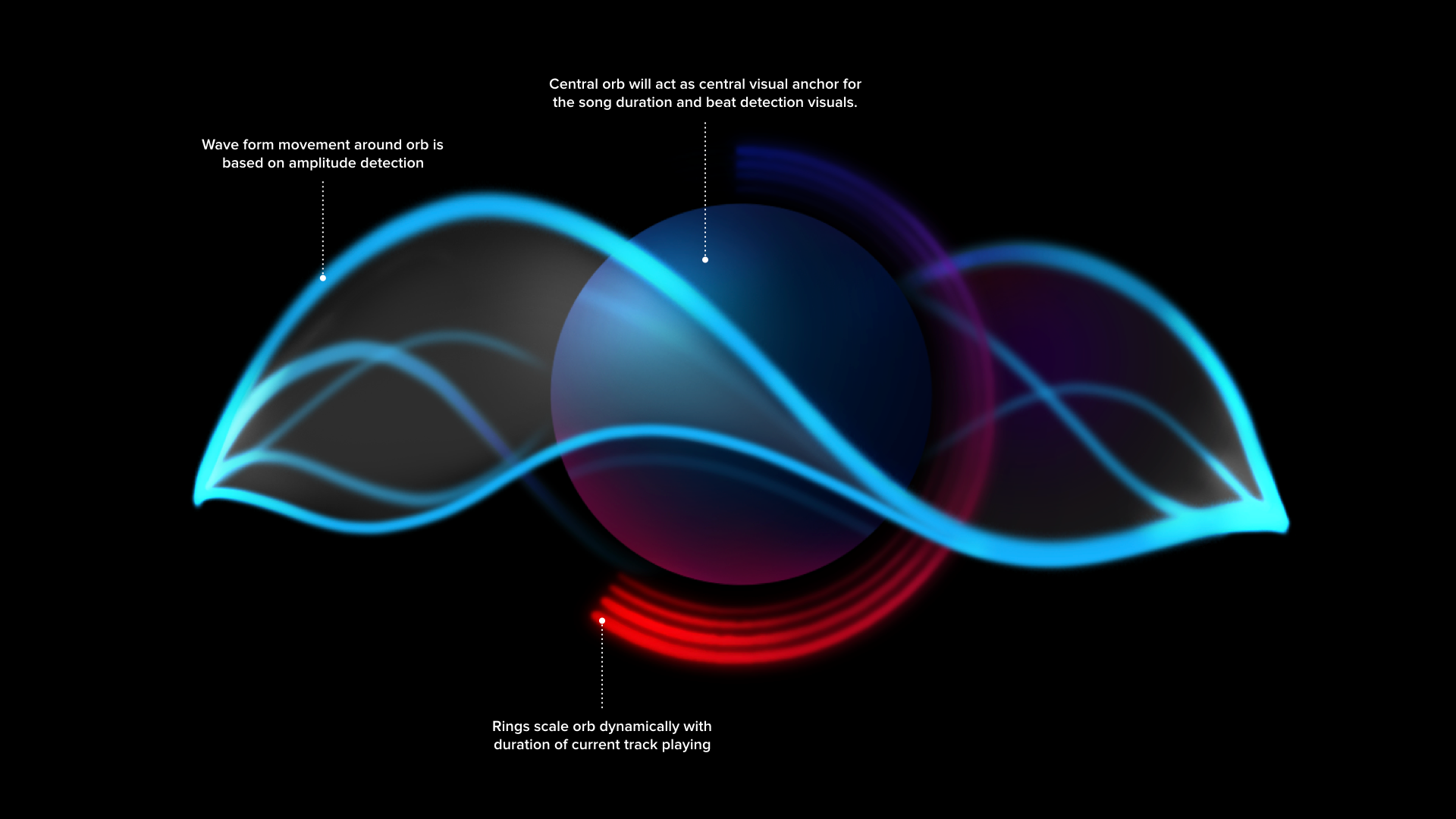
A waveform-driven system focused on rhythm, amplitude, and track progression. The visuals used synchronized motion and orbital structures to create a more technical and energetic aesthetic.Two visualization directions were explored:
Part 2 — Dream-like atmosphere
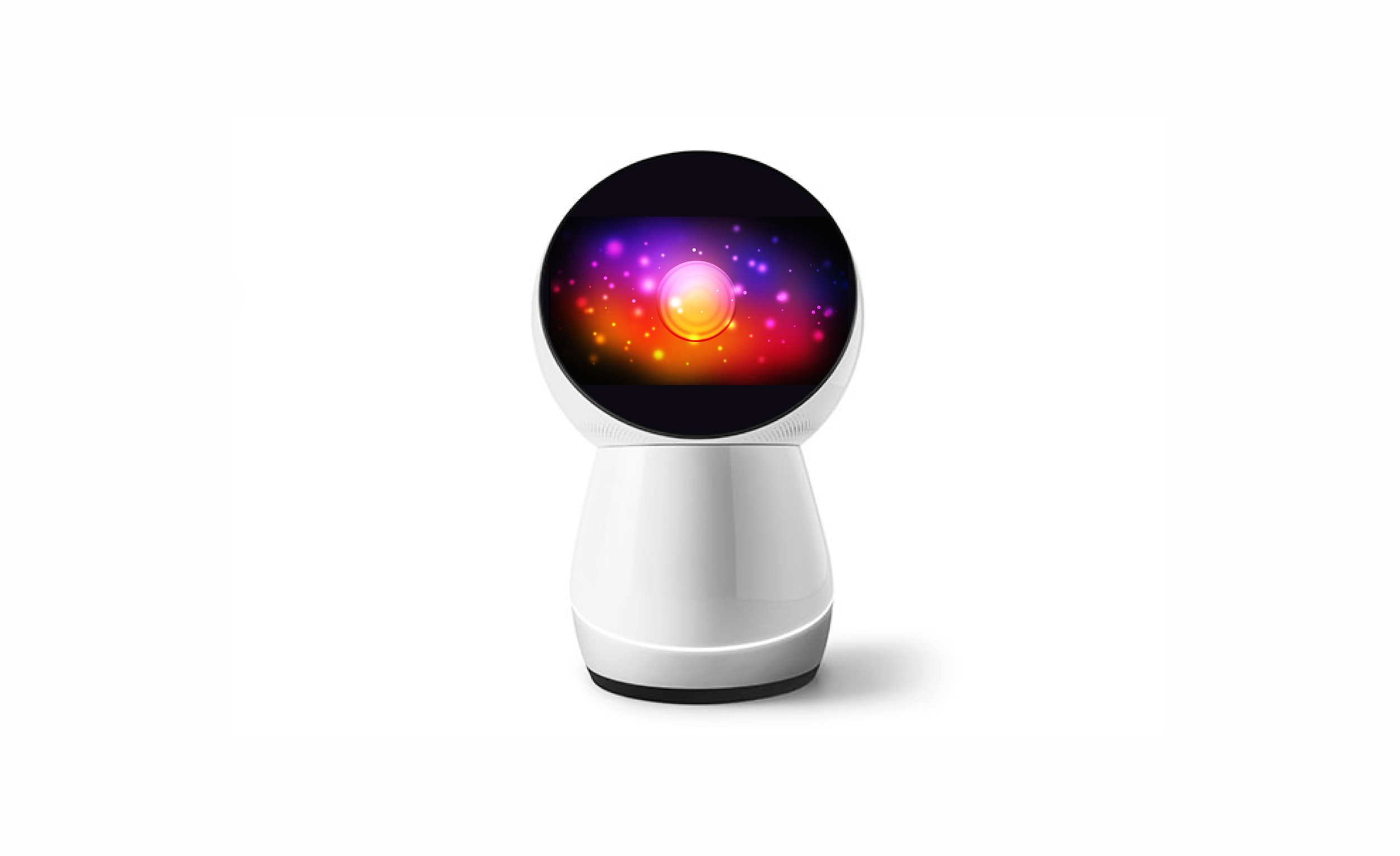
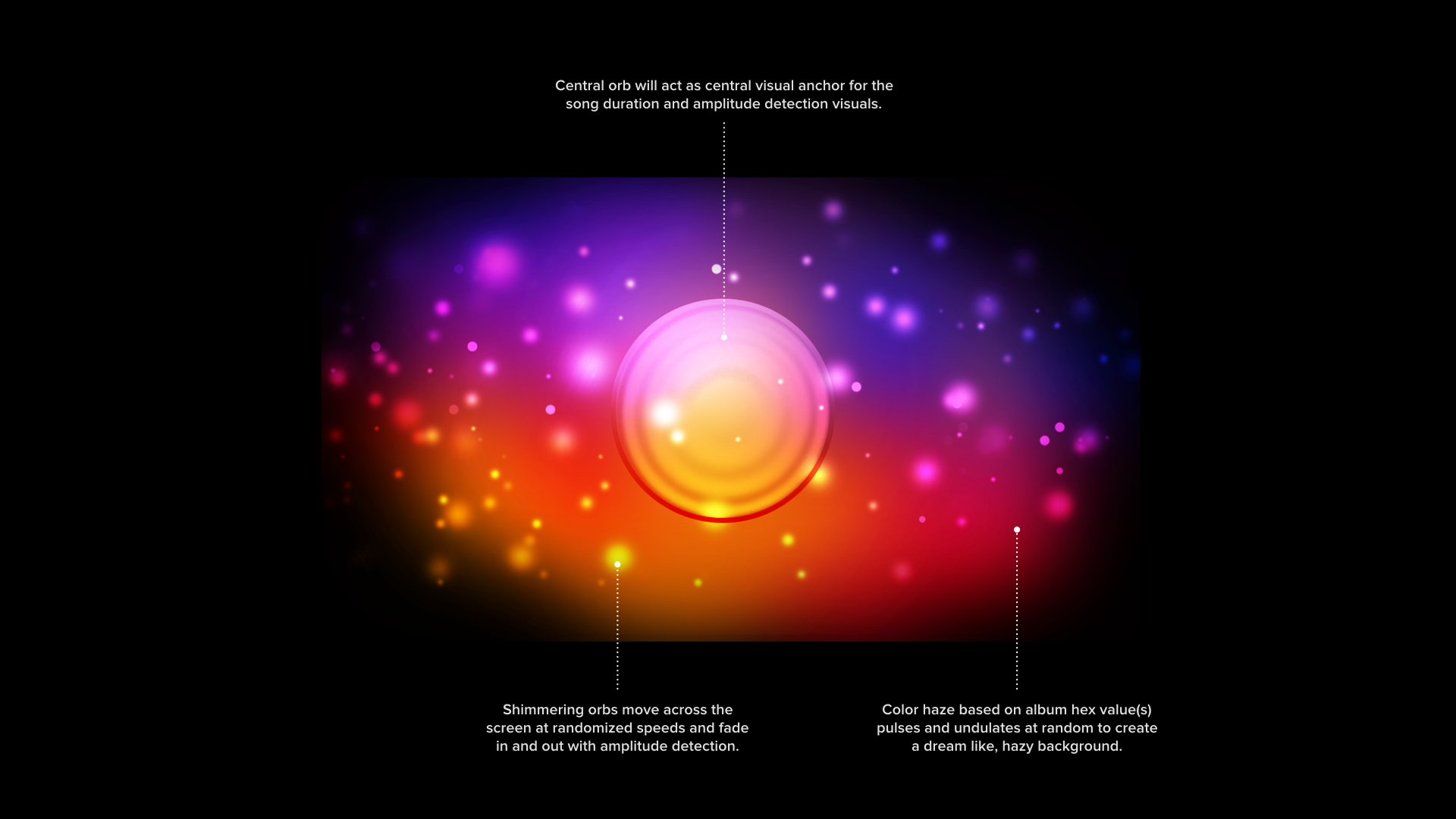
A softer direction aligned more closely with Jibo’s personality. Floating particles, color haze, and diffused motion created a calmer, ambient experience intended to feel emotionally warm and less mechanical.
This exploration highlighted how motion language alone can dramatically alter perceived system personality.
Sensory mapping
The interface reinforced trust through consistent behavioral mapping between sound and visuals.
Examples included:
Waveform intensity tied to audio amplitude
Orbital ring scaling tied to track duration
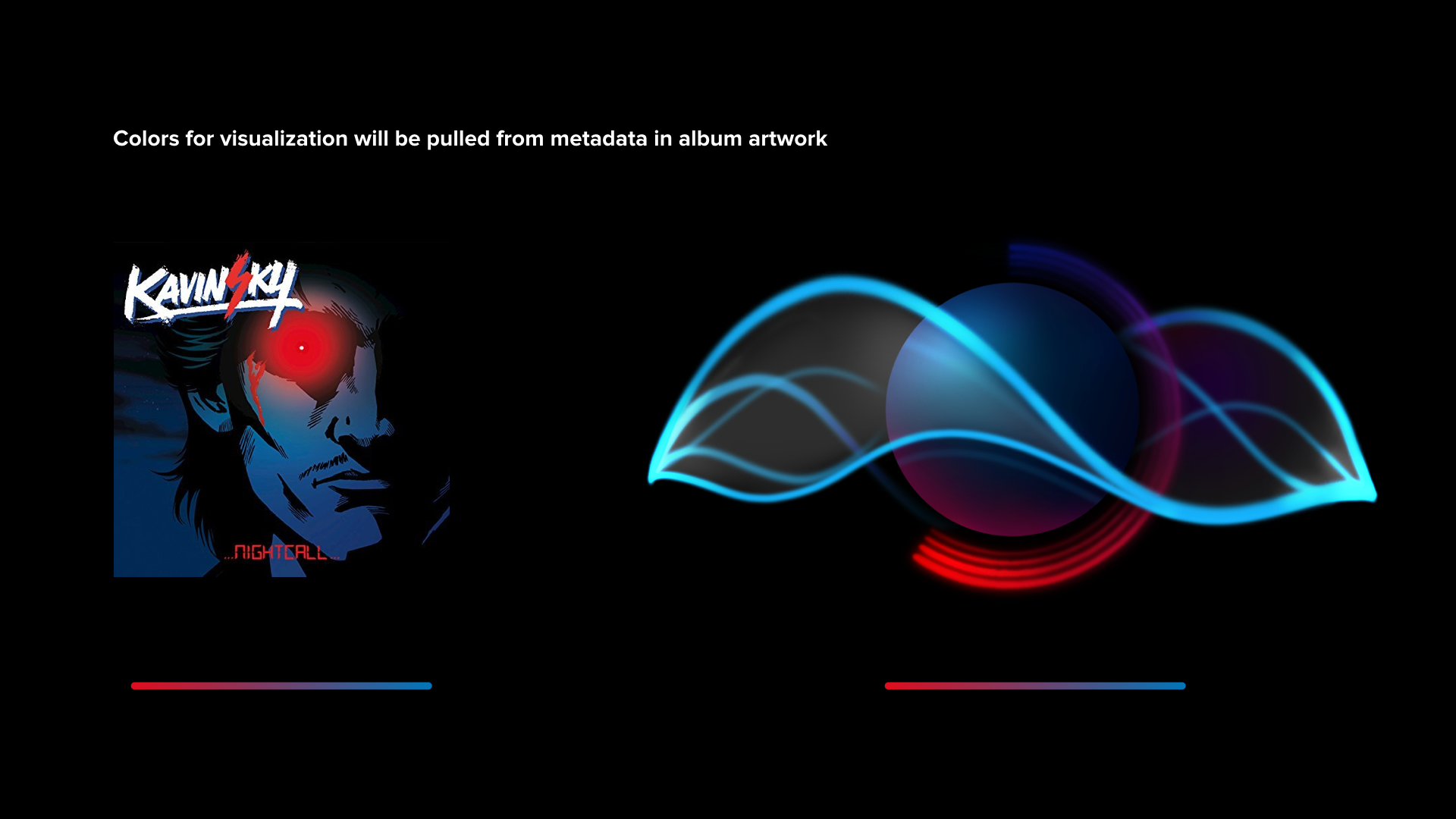
Background color palettes derived directly from album artwork metadata
These relationships helped users subconsciously understand that the system was reacting intentionally rather than displaying arbitrary animation.
Consistency between audio and visual feedback strengthened perceived intelligence and responsiveness.
Outcome
The project demonstrated how generative visualization, multimodal interaction, and adaptive UI behaviors could transform a functional media experience into an emotionally responsive system.
More importantly, it explored how:
Ambient interfaces reduce cognitive friction
Motion can communicate system state
Personality can emerge through behavioral consistency
Visual systems can reinforce trust without explicit instruction
The result was a music experience that felt less like operating software and more like interacting with a responsive digital companion.