Upperstate
Reframing Mobility Around Stability, Dexterity, and Real-World Use
Upperstate was created to address a gap between traditional mobility aids and the realities of everyday physical impairment. Existing hiking poles and canes provided support during walking, but introduced friction during common transitional moments such as entering vehicles, boarding airplanes, sitting at restaurants, or navigating uneven environments.
The core human factors challenge was not simply helping users walk — it was preserving balance, stability, and confidence during moments where traditional adjustable poles required users to release their grip, manipulate locking mechanisms, and visually confirm height settings.
Website: Upperstategear.com
User Context
The project originated through direct observation of a user with advanced mobility limitations, including Parkinson’s disease, reconstructive spinal surgeries, reduced dexterity, and medication-related fatigue. Traditional hiking poles dramatically improved mobility and balance, but revealed usability problems when used as daily assistive devices rather than recreational equipment.
These observations exposed several recurring human factors issues:
Two-handed adjustment mechanisms disrupted stability
Twist-lock and latch systems required fine motor control
Visual confirmation of height settings created accessibility issues
Adjustment actions increased cognitive and physical load
Transitional environments amplified fall risk and frustration
The opportunity became clear: redesign the interaction model around users with reduced dexterity, limited grip strength, impaired balance, and partial one-handed operation.
Human Factors Objectives
Operator Goals
Maintain stability while walking and transitioning between environments
Adjust pole or cane height quickly without losing support
Reduce physical effort and coordination requirements
Preserve independence during daily mobility tasks
Improve confidence while traveling and navigating public spaces
Cognitive Constraints
Many users experience:
Reduced short-term focus due to fatigue or medication
Limited ability to visually inspect mechanisms
Slower motor planning and reaction times
Increased anxiety around instability or falls
The product therefore needed to minimize:
Multi-step interactions
Fine motor precision
Visual dependence
Decision complexity
Solution
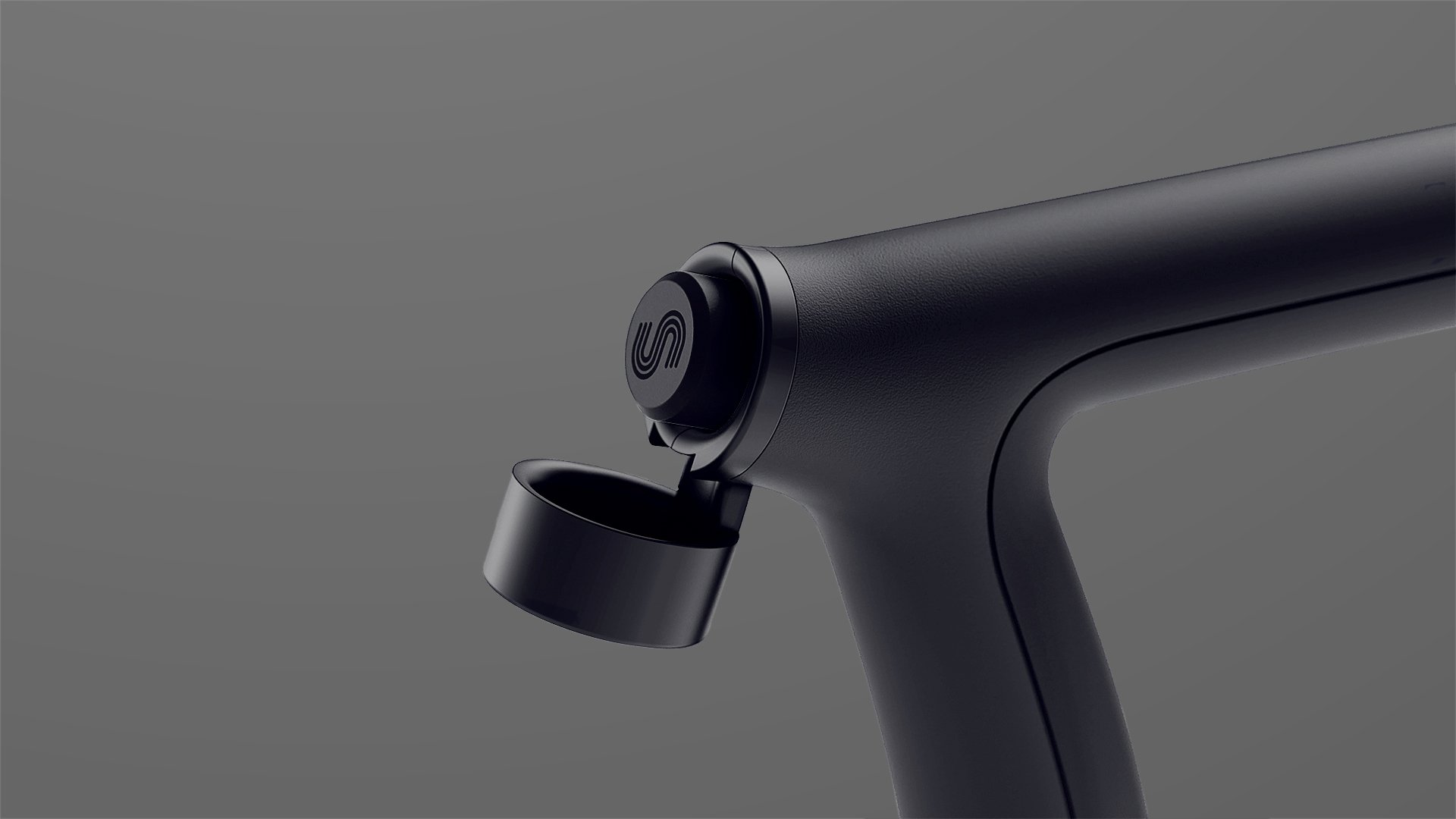
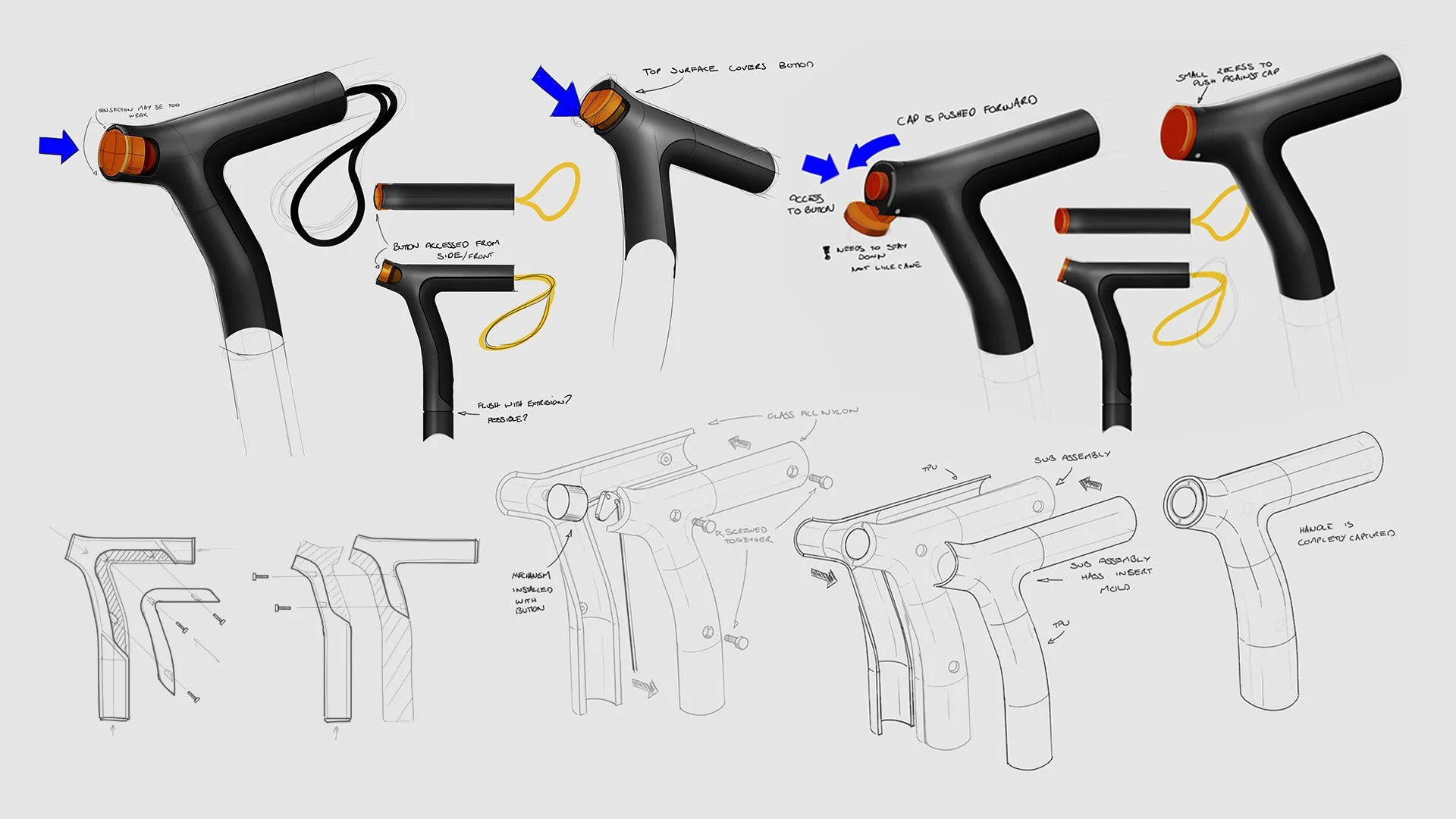
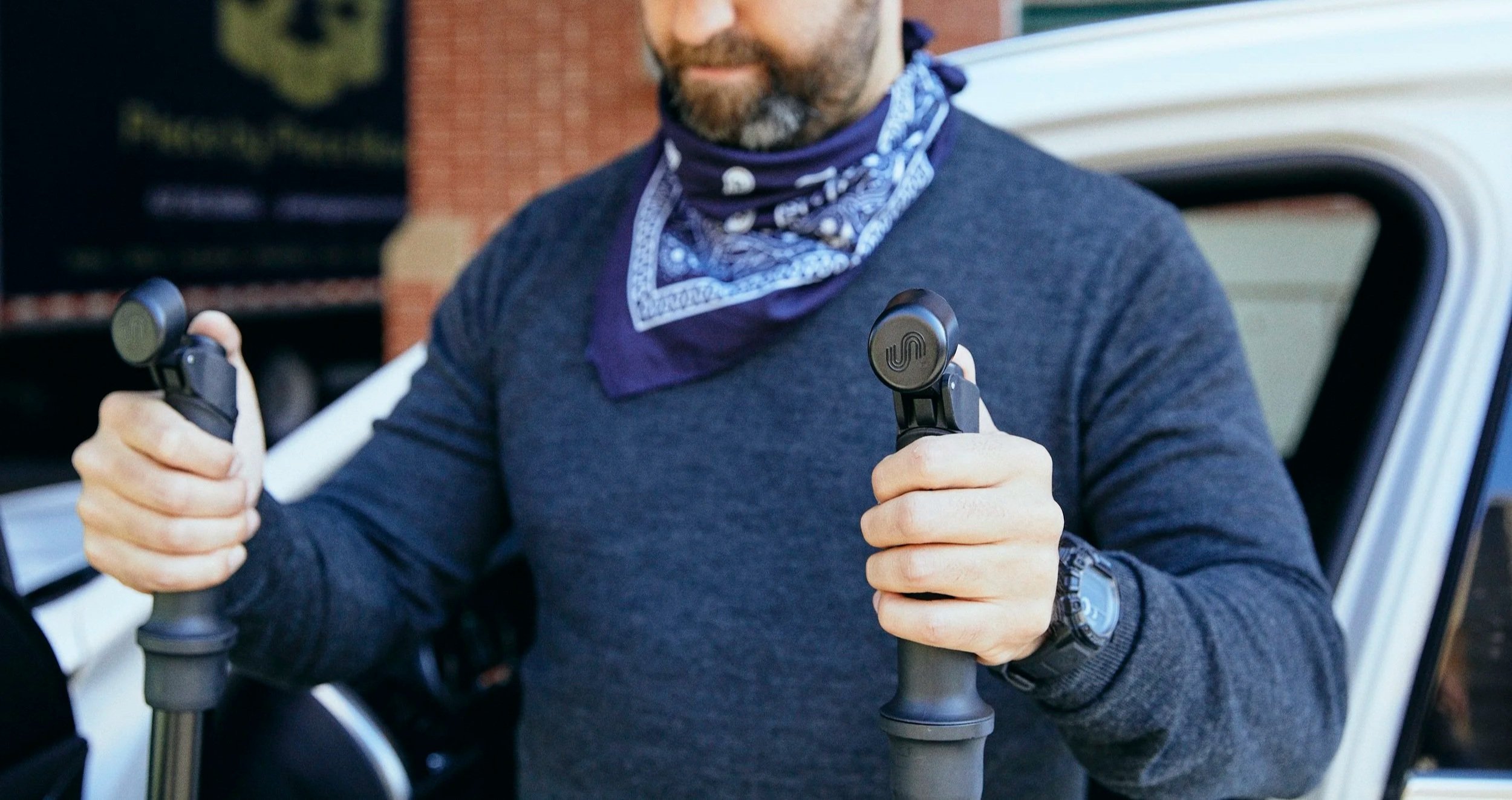
Upperstate introduced a push-button height adjustment system integrated directly into the handle, allowing users to adjust the device in one-inch increments without removing their hand from the grip.
This changed the interaction model from:
Release then Adjust then Re-grip then Stabilize
to:
Maintain grip then Adjust then Continue movement
The design prioritized:
Continuous physical support
One-handed operation
Reduced dexterity requirements
Low cognitive load
Immediate tactile feedback
Ergonomic Considerations
Grip Retention
The integrated adjustment button allowed users to maintain continuous contact with the handle, reducing instability during adjustment events.
Incremental Height Adjustment
One-inch increments simplified decision-making and reduced uncertainty around positioning.
Weight Reduction
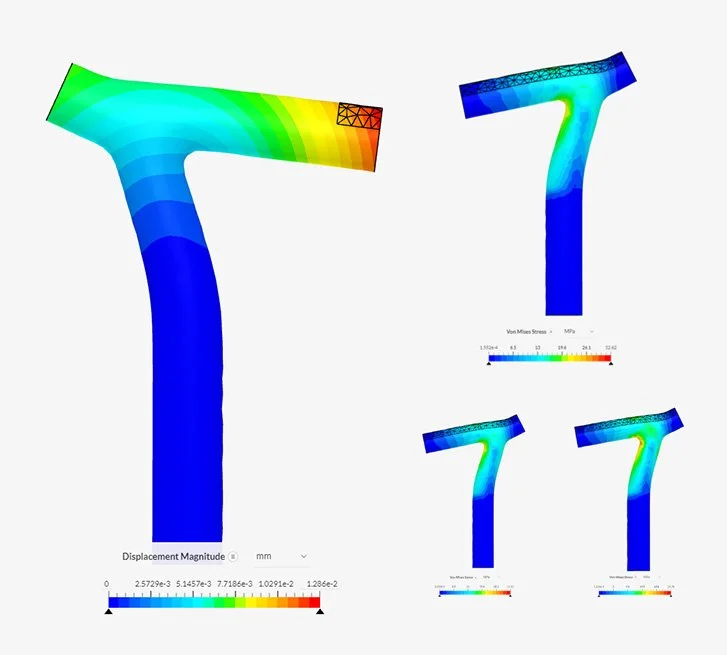
The second-generation pole reduced overall weight by approximately half a pound while maintaining a static load-bearing capacity above 300 pounds.
This reduced user fatigue during prolonged use without sacrificing perceived structural confidence.
Integrated Lanyard
The v2 integrated lanyard improved retention and recovery if grip was temporarily lost, particularly useful for users with tremors or inconsistent grip strength.
Attention Management
Mobility aids are often used in environments with divided attention:
Parking lots
Airports
Restaurants
Sidewalk transitions
Stairs and curbs
Upperstate reduced attentional demand by eliminating:
Visual searching for adjustment mechanisms
Multi-step lock verification
Precise alignment tasks
Excessive mechanical manipulation
The interaction became largely tactile and muscle-memory driven.
Safety Implications
The redesign directly addressed several fall-risk conditions:
Loss of support during adjustment
Grip instability
Over-rotation of locking systems
Incomplete tightening of telescoping poles
User hesitation during transitions
By preserving continuous hand contact and simplifying adjustment behavior, the system reduced opportunities for balance disruption during critical movement transitions.
Accessibility Considerations
The design intentionally supported:
One-handed operation
Limited grip strength
Reduced dexterity
Tremor conditions
Visual impairment
Aging populations
Temporary injury recovery users
The system also expanded beyond traditional elderly mobility demographics into users seeking preventative or confidence-enhancing mobility support.
Iterative Development
The project evolved through direct customer feedback and real-world usage observation.
Upperstate Pole v1
Introduced the core push-button adjustment system and validated the interaction model in market use. Initial inventory sold out.
Upperstate Pole v2
Customer feedback informed several refinements:
Reduced operational noise
Lower device weight
Integrated lanyard system
Improved overall usability and portability
Upperstate Cane
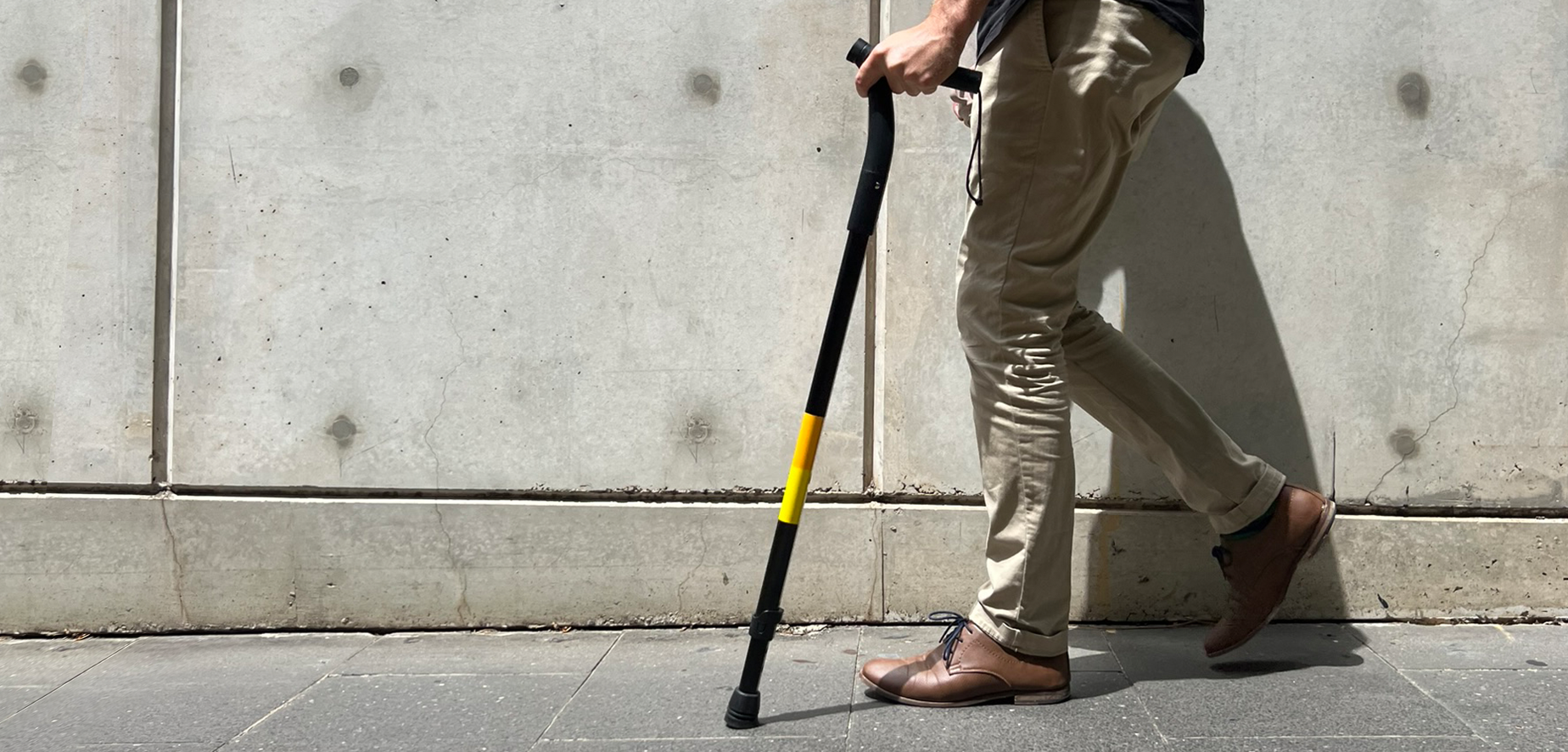
The same interaction principles were translated into a cane form factor after customer demand increased for a more traditional mobility profile.
Outcome
Upperstate transformed an outdoor recreational product category into a mobility-first assistive system designed around real physical limitations rather than ideal user conditions.
The project demonstrates how small interaction changes — particularly around grip continuity, cognitive simplification, and balance preservation — can significantly improve accessibility, confidence, and mobility independence.
Rather than treating mobility as purely mechanical support, the design reframed it as a continuous human interaction problem centered around:
stability,
attention,
dexterity,
confidence,
and environmental adaptability.